Real Clear Politics: The Fed’s Job Isn’t Finished Until Hiring Comes Back

The hard work of stabilizing the economy is beginning to pay off. Inflation has eased, productivity has strengthened, and cost pressures are receding across key sectors. The next and more consequential test is whether that progress translates into jobs. Small businesses, the engine of private-sector employment, are prepared to invest and hire, but only if capital becomes more accessible and affordable. The Federal Reserve’s next policy decision will determine whether this expansion reaches Main Street or stalls just short of it.

The labor market is sending a clear warning. Payroll growth averaged just 49,000 jobs per month in 2025, down sharply from 168,000 jobs per month in 2024. Private-sector hiring was among the weakest of any non-recessionary year in more than two decades. Subsequent revisions erased tens of thousands of previously reported jobs, revealing a labor market weaker than initially believed.
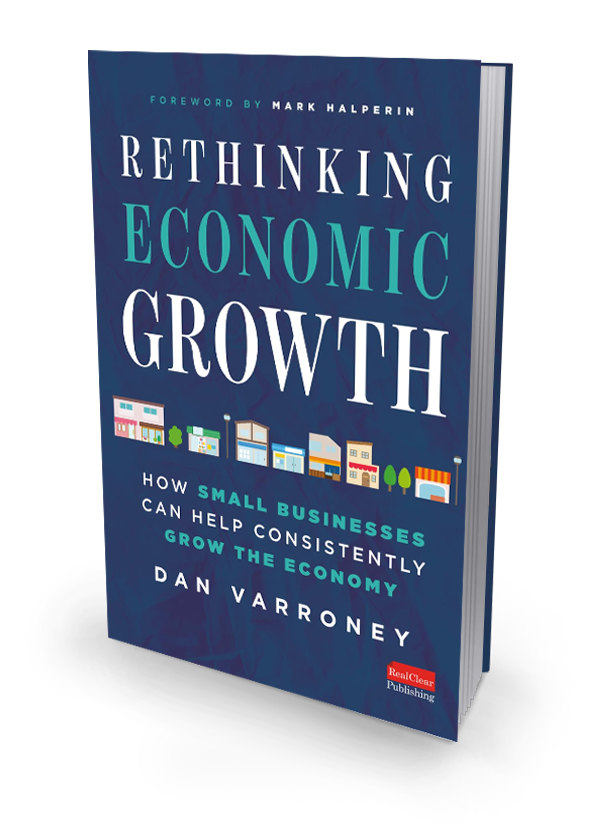
Rethinking Economic Growth: How Small Businesses Hold the Key to America’s Future

For decades, America’s economic growth has been erratic, surging in some years, stagnating in others. Despite being the largest and most productive economy on Earth, we’ve consistently failed to sustain the 3% annual growth rate economists agree is essential to maintain prosperity, global leadership, and rising living standards. The United States can and must do better.



The solution is hiding in plain sight: America’s 33 million small businesses. They employ nearly half the workforce, generate two-thirds of new private-sector jobs, and contribute almost 44% of U.S. GDP. They are the heartbeat of our communities, the backbone of our economy, and the engine of innovation and resilience. Yet policymakers continue to overlook their potential or worse, undermine it through outdated policies and bureaucratic neglect.

Trade Association Insights: Issue Coalitions Versus Ecosystems

Despite political dysfunction, pressure is increasing for Trade Associations to notch policy wins. Industry Executives are feeling the pinch of higher regulatory costs, and they want their Trade Associations to deliver results regardless of dysfunction. Whether it be in State Capitols or in Washington, DC the challenges are the same. While Trade Associations effectively utilize coalitions to build a bigger base of support there are other options to put on the table. In several instances, Trade Associations are utilizing ecosystems consisting of Industry Supply Chains and Value Chains to far extend their reach. In doing so, they are better positioned to notch more wins over the long term.

Trade Association Insights: The only certainty is uncertainty

Trade Associations that utilize uncertainty to evolve their value propositions will be in a much better position to engage their members, grow their membership, and more effectively shape the business environment for the Industry they serve. Based on rapid moving competitive issues, cost pressures and the risk of increased military conflict, Trade Associations have an unprecedented opportunity to be the solution that Industries and Members are seeking. For Trade Association CEO’s thinking through their 2024 strategic moves, it’s a time for reimagination.

Trade Association Insights: Advocacy, Industry Promotion, & Strategic Partnerships

Advocacy is at the core of every Trade Association Business model. However, Advocacy and how Trade Associations execute their policy and regulatory efforts is rapidly evolving. At a time when Industries most need help, the polarized political environment is stalling forward movement on key policy initiatives. In response, Trade Associations are reimagining their approaches to policy and regulatory challenges, and they are delivering new approaches to achieve Advocacy results that their Boards and  members expect.

Trade Association Insights on Strategic Planning

As corporate budgets tighten, Trade Associations are leaning in and building strategic partnerships with Industries, and they are providing increased member value through their Strategic Plans. In many cases, Strategic Plans serve as a roadmap for how Industry challenges can be overcome and how Trade Associations and Members work together to achieve a more favorable business environment. This approach yields higher levels of Board and Member engagement because it demonstrates a direct return on investment for companies. More important, it also makes a strong case as to why companies should join or renew their Trade Association membership.

2024 Trade Association Strategic Planning Must Align Organizations With Members

Regardless of Company size, there are concerns around a possible economic downturn in 2024. Every Industry is increasing its scrutiny on how they spend time and money on outside resources. This is nothing new as Trade Associations continue to evolve their value imperative. From the Global Pandemic through today, CEO’s are reinventing themselves to look, think, and act more like the Industry they serve, and focused on delivering the greatest possible return on every dollar spent. In many cases, Boards see their Trade Associations as the Industry and they do because their organization is aligned with their “Awake at night” challenges and business outcomes.

Streamlined Governance Drives Engagement

Board Members need to see the business reason to continue or increase their engagement on a Trade Association Board of Directors. They want their time and money invested in solutions that shape a more favorable business environment. Sometimes complex or even routine Governance gets in the way, and some Board leaders will pull back or leave. If this is the case and the timing is right, it could make sense to invest time and resources into streamlining Governance.

Unknown Unknowns Reshapes Strategic Planning

CEOs aren’t just focused on the current disruptions anymore, they are leaning in and identifying the unimaginable (unknown unknowns). For company Executives and Trade Association CEOs, it’s imperative to account for the unimaginable, and this happens by incorporating Scenario Planning into Strategic Planning efforts. Scenario Planning broadens Strategic Planning deliberations, and it forces consideration of most eventualities. In a marketplace defined by disruption and chronic uncertainty, the unimaginable must be addressed in every Strategic Planning process.